
Shared Hosting vs VPS vs Dedicated vs Bare Metal Servers for 2026: What’s Best for Your Business?
Choosing web hosting for 2026 can feel a bit like walking into a hardware store for the first time: you know you need something, but everything has complicated names and at least three different versions. Shared hosting? VPS? Dedicated? Bare metal? At this point, you half expect someone to offer you “unobtanium cloud deluxe.”
Shared Hosting
Shared hosting is a way for multiple websites to share the same server (hence the name). Multiple sites can share memory/RAM, resources, and bandwidth. There are many advantages to shared hosting, such as affordability. Shared hosting is the cheapest option there is; it's very accessible and is a great choice for people who are just starting their business. Now, despite the fact you'd be sharing servers with a lot of 'neighbours', you can rest knowing your site is safe and secure, as regular updates and firewalls will become the norm and professional hosting providers such as 365 will always take your website's security with utmost care.
However, there are a few disadvantages to shared hosting, such as decreased website speed. Having a large site can cause slow loading times and crashes, so choosing a good host provider with solid uptime is a must-have.
Virtual Private Server (VPS for short)
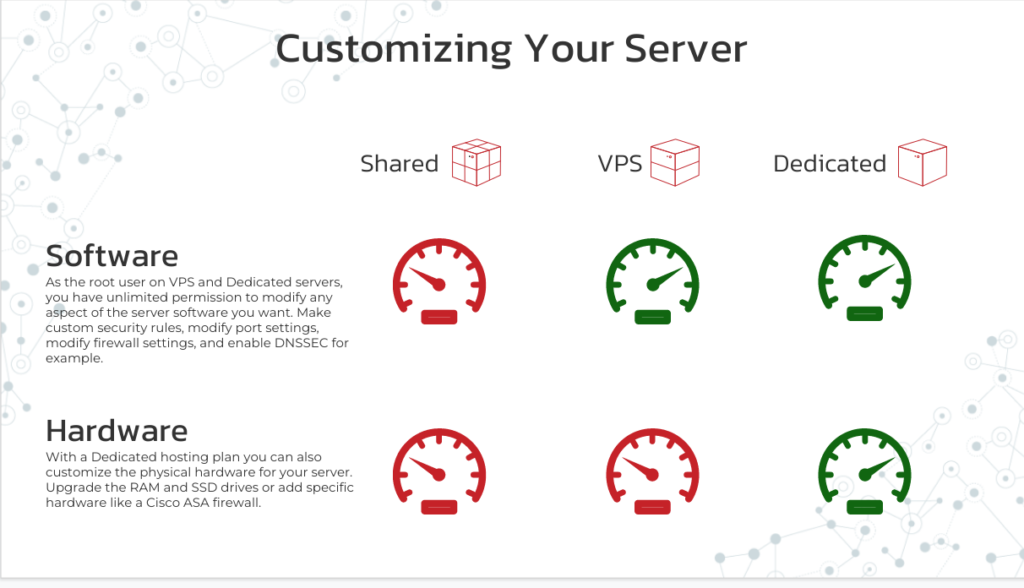
Let's start off with what a virtual private server is, a VPS is 1 larger server with breaks down into multiple smaller servers that act like a dedicated server (see under for more info on dedicated servers). With a VPS, you get all the features of a dedicated server without having to pay as much. There are many advantages to choosing a VPS, such as offering a great range of freedom and flexibility. However, there can be downsides to VPS hosting, such as budgeting (it's unwise for a new business owner to pick this as VPS will be more expensive than the shared hosting option above).
And if you decide to pick a self-managing plan for VPS hosting, it may prove difficult without prior knowledge of operating systems and correct setups, or it may lead to high security risks.
Dedicated Hosting
Let's go over what dedicated hosting is. To begin with, it's a physical computer (like one you may be using right now) that's solely for you, which is available for rental (usually) from your provider. Meaning you always have direct access and complete control over aspects such as both hardware and software, and guess what? Since it's physically isolated, there is less than 0% chance of any security risks and no need to share resources with anyone, well, since the server is just for you.
However, you should know the downsides to dedicated hosting as well, since it would be unfair for me to tell you only the good stuff. Which brings me to the first point, cost, which can cost a pretty penny upfront and for any long-term plans you may have. It's very time-consuming as well (depending on your knowledge) compared to the other options above, which can take as little as a few minutes. On the scalability side, it won't be as good since you'll need to have your wait for your host to upgrade your hardware and installations, which may take up more time and money.
Bare Metal Hosting
And lastly, we've arrived at bare metal hosting. Now dedicated hosting is a lot like bare metal hosting, with some small changes, such as being able to seamlessly integrate with cloud environments, and pricing with bare metal being more flexible with many pay as go plans and lastly speeds, with bare metal hosting being able to get up and running within a few minutes whilst dedicated hosting can take up from a few hours to a few days.
Wrapping things up for you
You've finally gotten to the end, which brings up the question that you can ask yourself.
What's going to be best for your business website?
- Bare Metal: suitable for businesses with shifting workloads that require direct access to raw resources from the physical servers and the flexibility of cloud computing.
- Dedicated: dedicated servers are ideal for businesses that require a long-term, stable, and consistent computing environment, such as high-traffic websites.
- Virtual Private Server: great for businesses that have surpassed the limitations of shared hosting and experience high volumes of traffic
- Shared Hosting: brilliant start for early and brand new businesses that are just starting off, its cheap, reliable and very popular.