
The landline switch-off: what your business needs to do before 31 January
The old copper phone network is being retired. Here's what it means for your business, what else might stop working, and how to switch without losing your number.
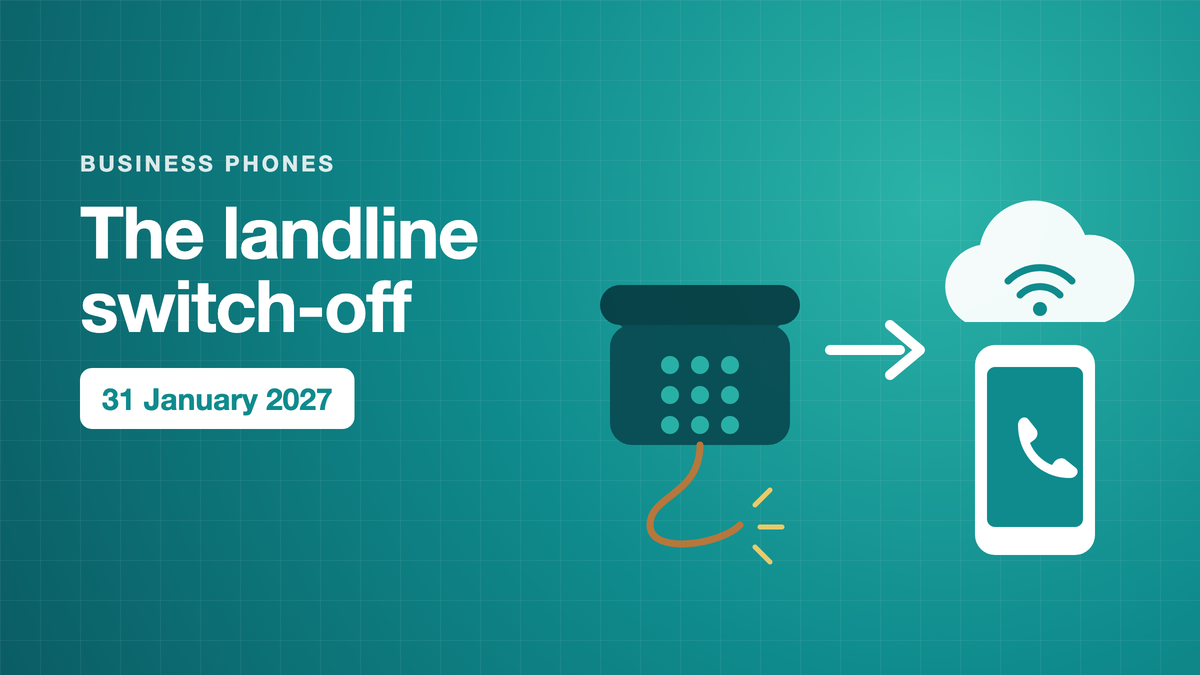
Here's a date worth circling in red: 31 January 2027. That's Openreach's final deadline for moving phone lines off the old copper network. After that, the traditional landline as we know it is on its way out for good.
If your business still has a "normal" phone line plugged into the wall, this one's for you. The good news? Switching is easier than you'd think, and you can keep your number. The less good news? Time is running out, and around 300,000 business premises were still waiting to make the move at the end of October, according to Openreach.
Let's break it down.
What's actually being switched off?
The UK's old analogue phone network (you'll hear it called the PSTN) has carried our calls for well over a century. It runs on copper wires, it's expensive to maintain, and it's simply not built for how businesses work today.
So it's being retired, and phone calls are moving onto internet-based lines instead. That's often called "digital voice" or VoIP (Voice over Internet Protocol). Same phone calls, just carried over your broadband rather than an ancient copper circuit.
Older ISDN lines, the kind many offices use to run multi-line phone systems, are on borrowed time too. If you've got one, now's the moment to plan its replacement.
What happens if I do nothing?
Your phone won't go dead at midnight on 31 January. But it's not a free pass either.
Lines that haven't moved will eventually be shifted onto a temporary, last-resort service from Openreach, designed to keep basic calls (including 999) working. It's pricier for providers, lacks features, and isn't a long-term home for anyone's business phones. ISDN and multi-line services aren't covered by it at all, so those really do need sorting before the deadline.
In short: leave it, and you're handing control of your business phones to someone else's timetable. Not ideal.
It's not just your phone
This is the bit that catches people out. Plenty of kit quietly relies on an old phone line, and you might not realise until it stops working. Have a look around for:
- Card machines that dial out over a phone line
- Burglar and fire alarms that call a monitoring centre
- Lift emergency phones
- Door entry systems
- Franking machines and the odd stubborn fax machine
- CCTV or telecare devices that report back over the line
Quick tip: anything plugged into a phone socket deserves a second look. Check with the supplier whether it'll work on a digital line or needs an upgrade. Most do have an easy fix, but you want to know now, not when a customer's card gets declined.
What about power cuts?
Fair question. Old copper phones drew power from the line itself, so they'd keep working in a power cut. Digital phones need power at your end.
Ofcom requires providers to offer at least one way to reach the emergency services for a minimum of one hour during a power cut, free of charge for customers who rely on their landline. For most businesses, a mobile or a small battery backup for the router covers it. If you've got staff or customers who depend on the landline, tell your provider.
Your switch-off checklist
- Find your lines. List every phone line and ISDN line across all your sites, including the ones nobody remembers paying for.
- Spot the hidden extras. Alarms, card machines, lifts, door entry. Ask each supplier what they need from you.
- Check your broadband. Digital calls run over your internet, so make sure your connection is up to it. For many businesses, a backup connection is a smart shout too.
- Keep your number. You don't need to change it. A good provider will port it across for you.
- Get your order in early. Openreach's cut-off for migration orders is 31 January 2027, and installers are busy. Don't leave it until the last week.
Why this is actually good news
We know, another thing on the to-do list. But going digital comes with some genuine perks:
- Work from anywhere. Take your office number on your mobile or laptop with an app.
- Smarter call handling. Call queues, voicemail to email, auto-attendants and call recording, without bulky hardware in a cupboard.
- Easy to grow. Add a new user in minutes, not weeks.
- Often cheaper. Especially when it's bundled with your broadband.
How 365 can help
We do this every day. We'll look at what you've got, move your calls to a cloud phone system built on 3CX, and port your existing numbers across with zero downtime. And because we also handle business broadband, your phones and your internet come from one team, on one bill, with no hidden fees.
Want the lot? Our Combi plan bundles phones, broadband and more into one tidy package.
Not sure where to start? Book a free consultation and we'll tell you exactly what needs to move, and what doesn't. No jargon, no pressure.
Stay busy. Stay connected.