Cyber Essentials for 75% off: how small businesses can claim the discount
The government now pays 75% of a new Cyber Essentials certificate for UK small businesses, so you could pay just £80 to £125 plus VAT. Here's who qualifies and how to claim it.
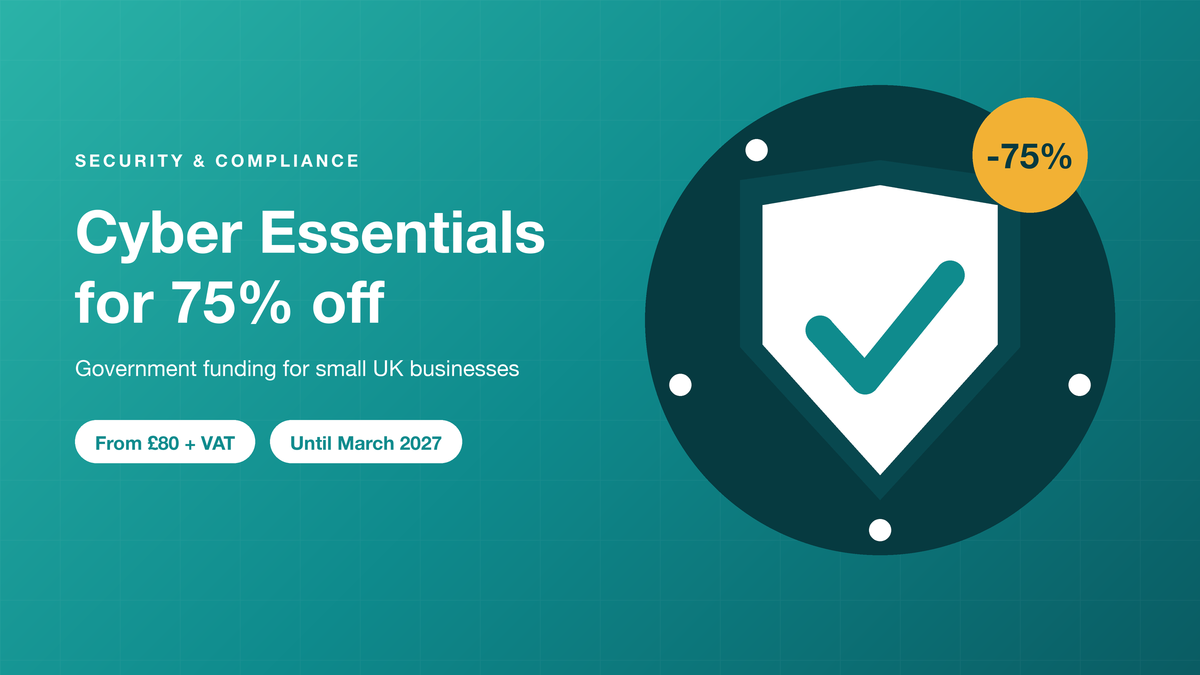
Here's a rare thing: a government scheme that makes your business safer and costs you less. Since 3 November, UK small businesses can get 75% off their first Cyber Essentials certificate. That means paying as little as £80 and no more than £125 (plus VAT), according to the government's announcement.
There's a catch, though, and it's a good one to know about: the pot is limited and it's first come, first served. So if "get our cyber security sorted" has been sitting on your to-do list, now's the moment.
Let's walk through what it is, who qualifies and how to claim it.
First up: what is Cyber Essentials?
Cyber Essentials is the UK government-backed scheme that checks your business has the basic defences in place against the most common online attacks. Think phishing emails, password guessing and malware, the everyday stuff that catches out small firms far more often than any Hollywood-style hack.
It's run by the National Cyber Security Centre (NCSC) with its delivery partner IASME. You answer a set of questions about how your IT is set up, an assessor reviews your answers, and if you meet the standard you get a certificate to prove it.
It covers five areas, which the NCSC calls the technical controls:
- Firewalls. A barrier between your devices and the internet that blocks unwanted traffic.
- Secure configuration. Turning off default passwords and features you don't need, so there are fewer ways in.
- Security update management. Keeping software and devices patched, so known holes get closed.
- User access control. Making sure people only have access to what they actually need.
- Malware protection. Stopping nasty software from running on your devices.
None of it is rocket science. But getting all five right, and being able to prove it, is what makes the certificate worth having.
What's the new discount?
It's called the Cyber Essentials First Step Fund, and it's part of a wider funding package published on 3 November. The headline details:
- 75% off the cost of a new Cyber Essentials certificate.
- You pay the remaining 25%, which works out at £80 to £125 plus VAT, depending on the size of your organisation.
- It's backed by £2.4 million of government funding, which the government estimates could help around 6,000 businesses.
- It runs until the end of March 2027, or until the money runs out, whichever comes first.
For context, the NCSC says Cyber Essentials normally starts at £320 plus VAT. So this is a genuinely useful saving, not a token gesture.
Does my business qualify?
According to IASME's guidance on the scheme, you need to:
- Be a micro, small or medium-sized organisation (fewer than 250 employees)
- Be based in the UK
- Either be applying for the first time, or not have held a Cyber Essentials certificate in the last four years
One thing to be clear on: the funding pays for the assessment and, if you pass, the certificate. It doesn't guarantee you'll pass. That's why it pays to get your house in order first.
Why bother? It's not just a badge
Fair question. Here's what you actually get out of it:
- Fewer easy wins for attackers. The controls are aimed squarely at the common, automated attacks that hit small businesses every day.
- Free cyber insurance. The government says organisations with Cyber Essentials and a turnover under £20 million also receive up to £25,000 of cyber liability insurance, when the certificate covers the whole organisation.
- More doors open. Plenty of larger companies and public sector contracts ask suppliers for Cyber Essentials. Having it already can be the difference between getting on a shortlist or not.
- Peace of mind. The government puts the average cost of a significant cyber attack on a UK organisation at around £195,000. A small business doesn't need anything like that to have a very bad month.
How to claim the discount: step by step
- Check you're eligible. UK-based, fewer than 250 staff, and no Cyber Essentials certificate in the last four years.
- Take stock of your IT. List your laptops, phones, routers, cloud accounts (like Microsoft 365 or Google Workspace) and who has admin access. You'll need this for the questions.
- Fix the obvious gaps. Change default passwords on routers and devices, switch on automatic updates, turn on multi-factor authentication for email and cloud accounts, and retire anything that no longer gets security updates.
- Apply through IASME. Go to firststep.iasme.co.uk, or ask a Cyber Essentials Certification Body to handle it for you. The discount still applies either way.
- Don't sit on it. IASME says the assessment must be purchased before 31 March 2027, and you then have six months to complete and submit it. With a first come, first served pot, earlier is better.
Got suppliers or big customers? Check this too
There's a second part of the package worth knowing about. Larger organisations that have signed the government's Cyber Resilience Pledge can put their smaller suppliers forward for fully funded Cyber Essentials, plus support from an NCSC-assured Cyber Advisor. If you supply a big firm, it's worth asking whether they've signed up.
How 365 can help
We practise what we preach: 365 Agency is Cyber Essentials certified, and security is built into everything we set up for our customers.
Our business broadband comes with properly configured routers (no default passwords left lying around), our 3CX cloud phone systems are kept updated and locked down, and our hosting keeps your website patched and protected. That covers a good chunk of the five controls before you've even started. And with our Combi plan, your broadband, phones and website come from one team on one bill, so there's one less thing to chase when the assessor asks how your kit is set up.
Thinking about going for Cyber Essentials while the discount lasts? Book a free consultation and we'll help you spot the gaps in your connectivity and web setup first. No jargon, no pressure.
Stay busy. Stay connected.